


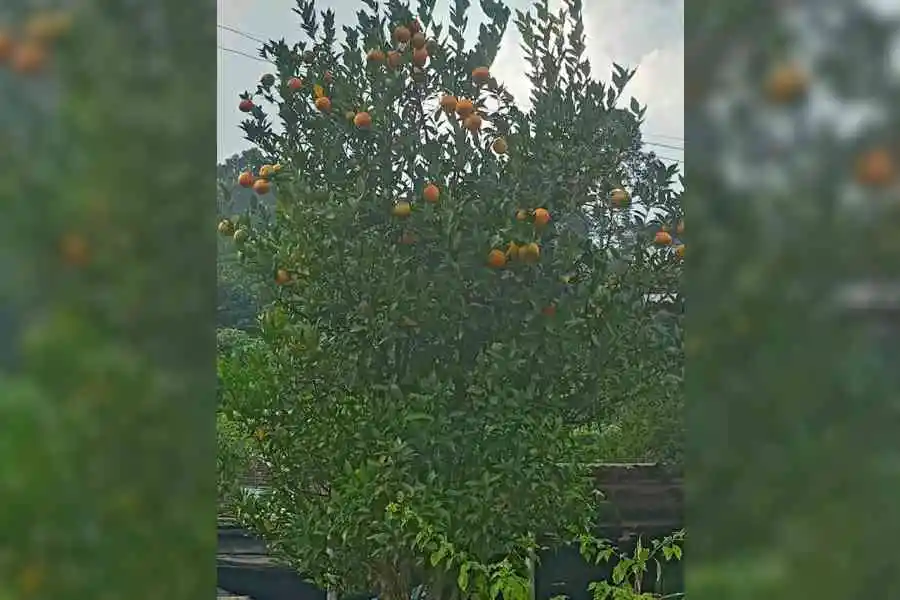
Darjeeling, December 01 (Siliguri Chronicle) – Darjeeling’s famed Mandarin orange, the signature winter fruit of the hills, has officially received a Geographical Indication (GI) tag, recognising its unique flavour and strong link to the region’s climate and terrain.
The application for the GI status was prepared and submitted on August 22, 2022.
Tulsi Saran Ghimiray, a former professor at Pundibari’s Uttar Banga Krishi Viswavidyalaya (UBKV) in Cooch Behar, said: “I am humbled to have had the opportunity to initiate and lead the GI proposal. This achievement belongs to our growers, our community, and everyone who contributed to this journey.”
Ghimiray also stated that the push for this recognition began in late 2021, when UBKV took up the idea of securing a GI tag for the fruit. He led the conceptualisation, fieldwork and documentation, spending time with orange growers and examining ageing orchards. His findings highlighted the urgent need to safeguard the identity and legacy of the Darjeeling Mandarin.
The application process was strengthened by key technical support from Mahua Hom Choudhury, nodal officer at the Patent Information Centre (PIC) under the West Bengal State Council of Science & Technology, along with her team.
“Throughout the process, we gained immense knowledge about this iconic fruit from Professor Ghimiray, without which this achievement would not have been possible. The next step is to increase production and expand marketing, especially because this mandarin is juicier and sweeter than the Nagpur orange. People look forward to it every winter just as they do to Darjeeling Tea,” Hom Choudhury told The Telegraph over a call from Calcutta.
Darjeeling Mandarin is now the third product from the region to earn a GI tag, after Darjeeling Tea and the Dalley Khursani chilli.
During the later stages of the process, the applicant was formally changed in August 2024 from UBKV to the Darjeeling Organic Farmers Producer Organisation (DOFPO) in Mirik, ensuring that the GI rights remain with the local farming community.
The fruit met all the required criteria and was published in the GI Journal (Volume 206) on July 23, 2025, followed by the mandatory public notice period.
“After completion of all examinations, hearings, and due diligence by the GI Registry under the ministry of commerce & industry, the GI status was officially granted on November 24, 2025,” Ghimiray said.
He noted that the DOFPO, now the registered proprietor of the GI, played a key role throughout the process. Its chairman, Manoj Subba, provided steady support — from sharing the initial list of farmers to representing the community at the consultative group meeting in Calcutta in November 2024.
With the GI tag now secured, Ghimiray said the next important step is to register all orange growers in Darjeeling and Kalimpong as Authorised Users (AU) so they can legally use the GI label and earn the fair value for their produce.
An estimated 4,000 farmers cultivate the fruit across the hilly regions of Darjeeling and Kalimpong.
Experts said the role of the inspection body will now be crucial. “It must ensure the authenticity of Darjeeling Mandarin by preventing oranges from outside the designated geographical area from entering the supply chain,” one expert noted.
The recognition comes at a challenging time for the crop, as orange production in the hills has been steadily declining over the past decade. Oranges are grown across roughly 4,150 hectares in the region, but annual production has dropped to around 29 metric tonnes from a peak of about 52 metric tonnes.
