


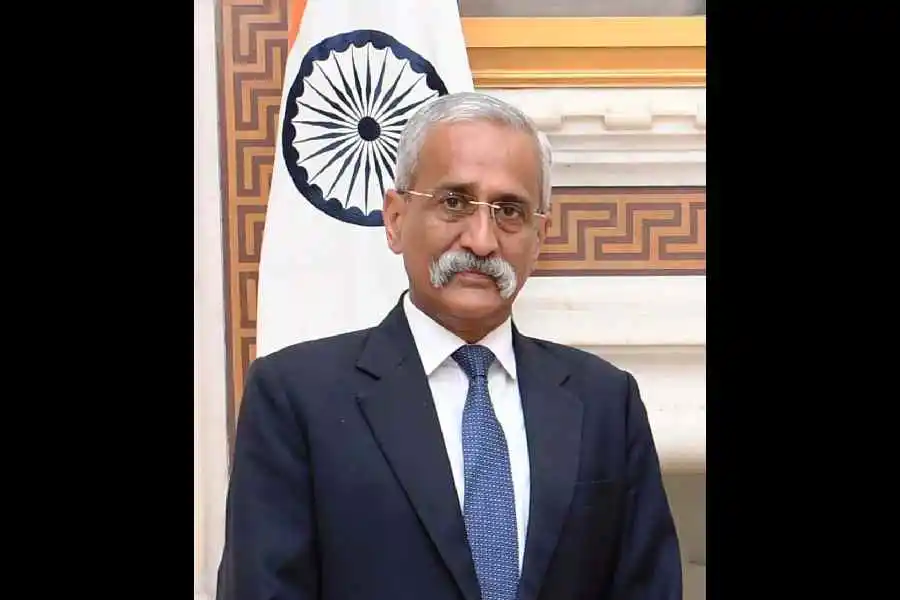
Darjeeling, October 18 (Siliguri Chronicle) – The Centre has appointed former deputy national security adviser Pankaj Kumar Singh as the “interlocutor and government representative” for matters related to Darjeeling, Dooars, and Terai.
The move by the BJP-led government comes just months before the Bengal Assembly elections, at a time when two of its key promises to the hill region — a “permanent political solution” and tribal status for 11 Gorkha communities — remain unfulfilled.
For decades, various groups in the Darjeeling hills have demanded statehood, autonomy, or special status under the Sixth Schedule — which requires a tribal-majority population. Granting tribal status to 11 Gorkha communities is seen as a step toward meeting this condition.
However, it remains unclear what specific issues Pankaj Kumar Singh, a retired IPS officer, will address in the Dooars and Terai regions.
The BJP has held the Darjeeling Lok Sabha seat since 2009 but is now facing discontent, even among its allies in the hills, over the lack of progress on territorial and tribal status issues.
On Friday, the party’s hill allies — Bimal Gurung’s Gorkha Janmukti Morcha and Mann Ghisingh’s Gorkha National Liberation Front — welcomed Pankaj Kumar Singh’s appointment as interlocutor.
Darjeeling MP and BJP leader Raju Bista said the BJP-led NDA government “has addressed and resolved many contentious issues confronting the nation.”
Singh will hold a rank equivalent to that of a central government secretary.
According to the terms of reference, Singh will take the dialogue forward and recommend measures for “social economic upliftment, cultural recognition, preservation of cultural heritage of Gorkhas in the region and address their aspiration within the constitutional framework of the country”.
The Bharatiya Gorkha Prajatantrik Morcha (BGPM), a Trinamool Congress ally that runs the Gorkhaland Territorial Administration as well as the municipalities and panchayats in the hills, dismissed the Centre’s latest move.
“The move is nothing but an eyewash to hoodwink the Gorkhas ahead of votes (2026 Assembly polls),” its spokesperson Keshav Raj Pokhrel said.
He said the political leadership at the Centre already understands Darjeeling’s issues and sees no need to appoint a government official to carry forward the dialogue.
“Union home minister Amit Shah had come to Darjeeling in 2021 and said he was aware of all the issues of Darjeeling,” Pokhrel said.
This is not the first time the Centre has appointed an interlocutor for Darjeeling.
In 2009, the Congress-led UPA government named Lt Gen (retd) Vijay Madan to facilitate talks between the Centre, the Gorkha Janmukti Morcha — the main force behind the statehood agitation — and the then Left Front government in Bengal.
Madan held a few meetings with stakeholders, but little progress was made. He resigned in 2011, just months before the Bengal Assembly elections.
He had then told The Telegraph: “With the Assembly elections round the corner, there is no possibility of some dramatic announcement. I have tendered my resignation as I did not want to hang around uselessly.”
Many observers in the hills believe that resolving the Darjeeling issue depends more on “political will” than on additional talks.
In recent months, Bimal Gurung has suggested that the Centre might introduce a model similar to the Bodoland Territorial Region (BTR) in Assam.
The BTR, administered by the Bodoland Territorial Council, falls under the Sixth Schedule and covers five districts in Assam.
